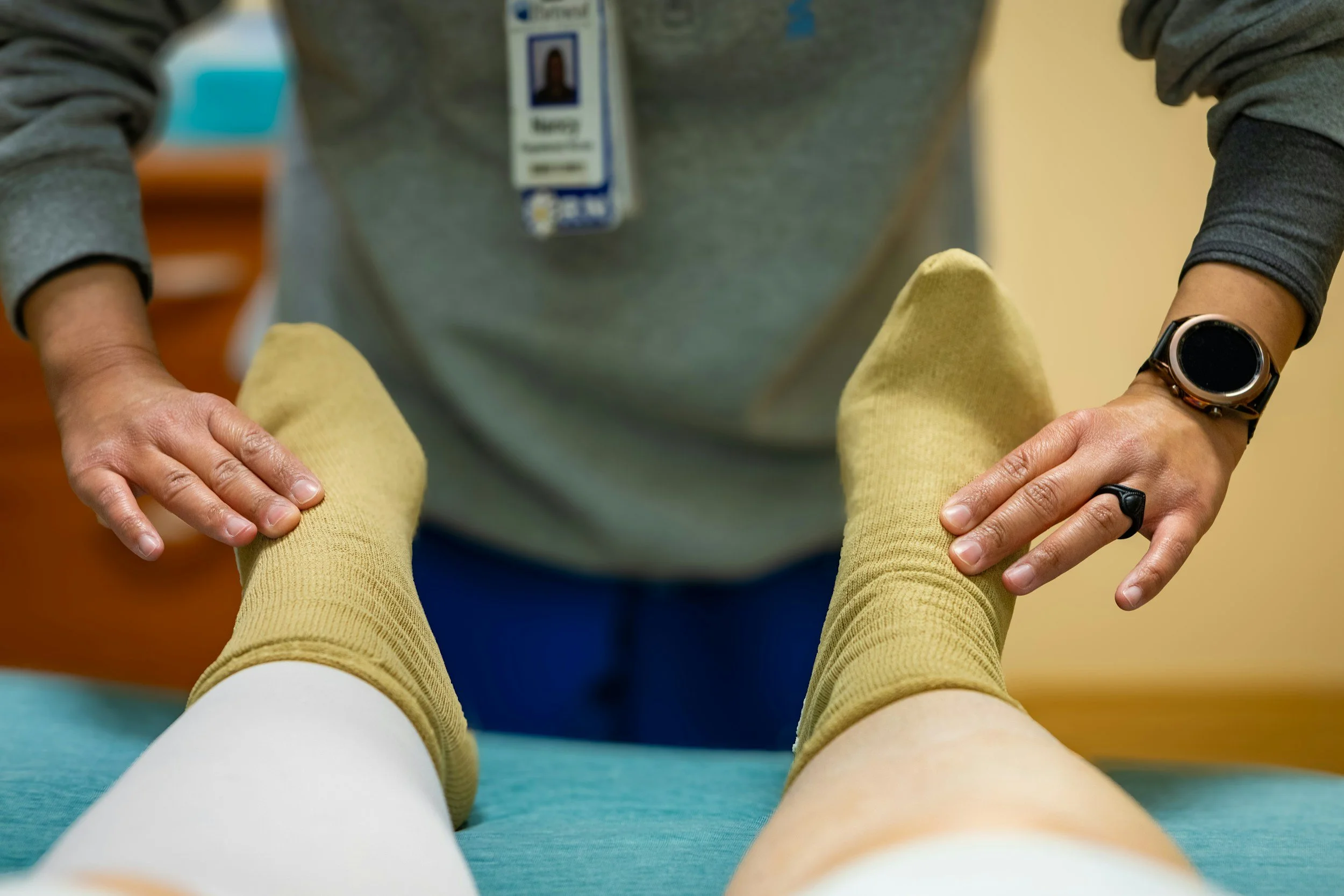
If you have ever picked up a pair of compression stockings, you have probably noticed a string of numbers on the package. Those numbers are not marketing jargon. They describe how firmly the garment squeezes your leg, and that firmness makes a real difference in how the stocking feels and what it is designed to do.
Understanding the three most common ranges can take a lot of the guesswork out of shopping. This article is general information, not medical advice, so it is not a substitute for a conversation with your own provider about what suits your legs.
What Does mmHg Actually Measure?
The abbreviation stands for millimeters of mercury, the same unit used for blood pressure readings. In a compression stocking, it tells you how much pressure the garment applies at the ankle, where it is strongest. Most medical-style stockings are graduated, meaning the pressure gently eases as the stocking moves up the leg.
That gradual change is the whole point. The snug ankle and calmer calf and thigh encourage blood to keep moving upward toward the heart instead of pooling low in the leg. A higher number simply means a firmer squeeze, not a "better" stocking.
The Three Levels You Will See Most Often
Here is how the common ranges generally compare. Think of them as steps on a ladder rather than a ranking of good, better, and best.
1. 15–20 mmHg: Light Support
This is the gentlest of the three and is often described as mild compression. Many people reach for it when their legs feel tired or heavy after a long day, or when they want a little extra support during travel or time on their feet.
Because it is lighter, it is usually easier to put on and more comfortable for all-day wear. If you are new to compression, it is a common place to begin the conversation.
2. 20–30 mmHg: Moderate Support
The middle range is firmer and is widely used for more noticeable symptoms such as aching, swelling, or visible varicose veins. You will feel it more as you pull it on, and many people need a short adjustment period.
This is also the range many people ask about when they want to understand their options, so our guide to choosing the right compression stockings for vein support is a helpful companion read.
3. 30–40 mmHg: Firm Support
This is the highest of the three and is typically recommended by a clinician rather than chosen off the shelf. It applies strong pressure and can be harder to wear without help, so donning aids and professional fitting often matter more here.
Because the squeeze is so firm, it should not be started casually. A provider who has looked at your legs can tell you whether this level makes sense for you.
A Quick Wrap-Up
Lighter levels favor comfort and prevention, while firmer levels are built for more pronounced concerns. The right number depends on your legs, your symptoms, and your daily life, not on which one sounds strongest.
What Shapes the Right Choice for You?
No single level suits everyone, even among people with similar symptoms. A few practical considerations tend to guide the decision, and each is worth thinking through before you buy.
Your Symptoms
Mild fatigue and occasional puffiness call for a different approach than persistent swelling or skin changes. Our overview of how to manage leg swelling and discomfort covers what can help day to day.
Your Underlying Vein Health
Stockings manage symptoms, but they do not correct the cause of a leaky valve. If you are curious about what may be happening inside the vein, understanding venous reflux and its treatments is a good place to start.
Fit and Measurement
A stocking that is too loose will not do its job, and one that is too tight can be uncomfortable or even problematic. Proper measurement of ankle, calf, and leg length makes a bigger difference than most shoppers expect.
Comfort and Daily Routine
If a stocking is miserable to wear, it will end up in a drawer. Material, toe style, and how easily you can put it on all affect whether you will stick with it.
Compression Is One Tool Among Several
Stockings are popular because they are simple and non-invasive, but they are not the only option. Some people also explore pneumatic or non-pneumatic devices, and our post on what a non-pneumatic compression device is and whether it could help your legs explains how those work.
Whatever you use, compression is part of a bigger picture that includes movement, healthy habits, and a proper look at what is driving your symptoms. That is why an evaluation matters, and the importance of vein evaluations is worth a read if you have been putting yours off.
Take the Next Step Toward Comfortable Legs
The numbers on the package are really just a way of describing firmness: light at 15–20, moderate at 20–30, and firm at 30–40 mmHg. The best choice is the one matched to your legs and your needs, ideally with some professional input.
If you are unsure which level fits, reach out to the Elmore Medical team to talk through your symptoms and options. A short conversation now can save you from buying the wrong pair and help you get back to comfortable, confident days on your feet.
Elmore Medical Vein & Laser Treatment Center is the premier vein specialty medical practice in the Central Valley. Dr. Mario H. Gonzalez and his staff offer years of experience and medical expertise that you won’t find anywhere else. Contact us to set up a consultation appointment.