What Is a Non-Pneumatic Compression Device and Could It Help Your Legs?
Most people are familiar with compression stockings, and many patients with chronic vein disease or lymphedema have also heard of pneumatic compression devices, the inflatable sleeves that rhythmically squeeze the legs to move fluid upward. But a newer category of compression technology has been gaining attention in the vascular medicine world: the non-pneumatic compression device (NPCD).
This new type of compression device has received endorsement from two of the most respected vascular professional societies, the American Venous Forum (AVF) and the American Vein and Lymphatic Society (AVLS), for the management of certain venous and lymphatic conditions. Here we will discuss what they are, how they work, and who might benefit.
What Is a Non-Pneumatic Compression Device?
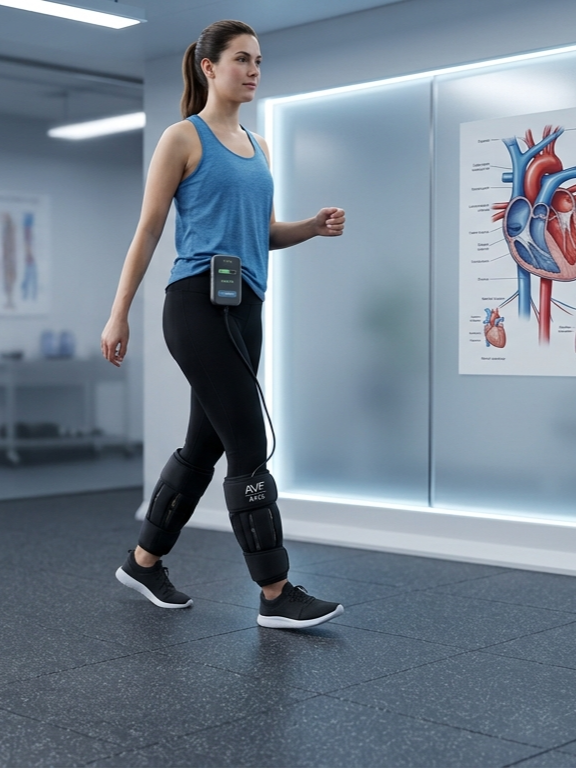
Like a pneumatic compression device (PCD), the NPCD delivers sequential gradient compression to the limbs. This promotes healthy venous circulation and lymphatic flow in the legs, thereby reducing swelling and improving patient comfort and mobility. However, the NPCD uses a different technology to apply sequential pressure.
Unlike the PCD, which uses an air compressor to inflate and deflate air-filled chambers along the course of the leg, the NPCD uses electromechanical actuators made with nitinol, a shape memory alloy that is activated by a small electrical current. The NPCD compresses each segment of the limb, starting from the ankles, by activating different sections of the actuators in turn. In addition to sequential compression, the NPCD also provides static compression in the form of the inelastic compression garment in which the electromechanical actuators are embedded.
Another key distinction between the pneumatic compression device and the non-pneumatic compression device is the ability to be mobile during treatment. The NPCD controller is small and portable, allowing patients to be on the move during use. When patients are walking and activating their leg muscle pumps while using the NPCD, this further enhances venous and lymphatic return compared to sitting or lying down while using a compression device. Furthermore, patients are often more likely to use their NPCD on a regular basis because it doesn’t stop them from doing their daily activities.
Why Are the AVF and AVLS Endorsing NPCDs?
The American Venous Forum and the American Vein and Lymphatic Society have recognized NPCDs based on an accumulating body of clinical evidence showing that these devices can meaningfully reduce leg swelling and improve quality of life in patients with venous and lymphatic disease.
Who Might Benefit From an NPCD?
NPCDs are not appropriate for every patient, but they may be a good fit for a range of individuals. Your provider can help determine whether this category of device suits your specific situation. Patients who have lymphedema from chronic venous insufficiency or other causes are often good candidates for compression devices. Patients with lipedema may also benefit.
It is worth noting that PCDs and NPCDs are generally not a substitute for treatment of any underlying venous disease. Procedures like sclerotherapy and endovenous laser ablation address the root cause of venous reflux, while compression devices manage symptoms and support recovery. In addition, compression devices are used for part of the day; they are not a substitute for compression stockings or compression wraps, which still should be worn for the rest of the day.
Talking to Your Provider
If you have been managing chronic venous insufficiency, lymphedema, leg ulcers, or persistent swelling and your current compression approach is not working as well as you would like, an NPCD may be worth discussing. Our team can evaluate your degree of venous and lymphatic disease, review your compression history, and help determine whether an NPCD is appropriate and potentially covered by your insurance.
Effective compression is one of the cornerstones of long-term vein and lymphatic health. With newer options like non-pneumatic compression devices now backed by leading vascular societies, patients have more tools available than ever before. Contact us to schedule an evaluation and learn what compression strategy is right for you.
Elmore Medical Vein & Laser Treatment Center is the premier vein specialty medical practice in the Central Valley. Dr. Mario H. Gonzalez and his staff offer years of experience and medical expertise that you won’t find anywhere else. Contact us to set up a consultation appointment.